Potatoes are grown from seed potatoes, not true seed — and getting that first step right (along with spacing, hilling, and timing) is most of what separates a thin, disappointing harvest from a genuinely productive one. Here’s the complete process, including a dedicated section for growers in Kenya, where potato is the second most important food crop after maize.
Quick answer: Potatoes are planted from certified seed potatoes (whole small tubers or cut pieces, each with at least one healthy “eye”), placed 10–15 cm deep in well-drained, loose soil, spaced about 30 cm apart in rows 70–90 cm apart. Hill soil around the growing stems as they emerge, water consistently, and expect a harvest in 90–120 days depending on variety.
What You’ll Need
- Certified seed potatoes — disease-free tubers specifically grown for planting, not grocery-store potatoes (which may carry disease and are often treated with a sprout inhibitor that prevents them from growing well).
- Well-drained, loose soil — sandy loam with a pH around 5.0–6.5 is ideal.
- Full sun — at least 6 hours a day.
- Compost or well-rotted manure.
- A hoe or hilling tool for mounding soil around growing plants.
Step 1: Choose and Prepare Your Seed Potatoes
Buy certified seed potatoes from a reputable agro-vet, seed company, or agricultural research organization — certified seed is the single biggest factor in avoiding diseases like bacterial wilt and late blight, which can otherwise devastate a crop.
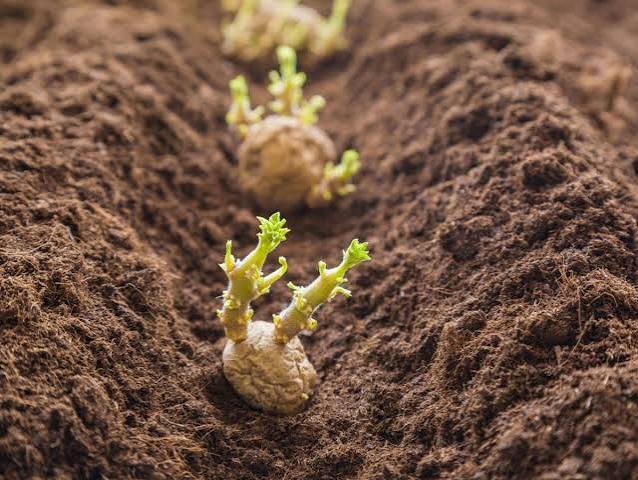
Chitting (optional but recommended): 2–4 weeks before planting, place seed potatoes in a single layer in a cool, bright spot (not direct sun) to develop short, sturdy sprouts. This gives plants a head start and can mean an earlier harvest.
Cutting larger seed potatoes: If a seed potato is larger than a chicken egg, cut it into pieces, making sure each piece has at least one or two healthy eyes. Let cut pieces sit in a cool, dry, well-ventilated spot for 1–2 days before planting — this allows the cut surface to callus over (heal), which significantly reduces the risk of the piece rotting in the ground.
Step 2: Prepare the Soil
- Choose a sunny site with loose, well-drained soil — potatoes grown in heavy, compacted clay come out small and misshapen.
- Work the soil to a depth of about 25–30 cm, breaking up clumps and removing rocks.
- Mix in compost or well-rotted manure. Avoid excessive fresh nitrogen fertilizer, which encourages leafy growth at the expense of tuber development.
- Dig shallow trenches or furrows about 10–15 cm deep, spaced 70–90 cm apart.
Step 3: Plant the Seed Potatoes
- Place seed potatoes (whole or cut, cut-side down, eyes facing up) in the trench, spaced about 30 cm apart.
- Cover with about 5–10 cm of soil, leaving the trench not fully filled — you’ll finish filling it in as the plants grow (see hilling, below).
- Water gently after planting.
Step 4: Water and Care During Growth
- Keep soil consistently moist, especially during flowering, which is when tubers are actively forming below ground — this is the stage most sensitive to drought stress.
- Avoid waterlogging. Potatoes are prone to rot in soggy soil, so well-drained beds matter as much as regular watering.
- Weed regularly, especially in the first month, before the potato canopy fills in and shades out competition on its own.
Step 5: Hilling — The Step Most Beginners Skip
Hilling means mounding soil up around the base of the growing stems as the plant gets taller, usually done two to three times over the season as new growth emerges.
Why it matters: Tubers form along the buried stem, close to the soil surface. If they’re exposed to sunlight, they turn green and develop solanine, a natural toxin that makes them bitter and unsafe to eat in any quantity. Hilling keeps developing tubers covered and in the dark, and also gives the plant more room to produce additional tubers along the buried stem.
How to do it: Once plants are about 15–20 cm tall, use a hoe to pull soil up around the base of each plant, covering the lower stem and leaving just the top leaves exposed. Repeat every few weeks as the plant continues to grow, building a low ridge along the row.
Common Pests and Diseases
| Problem | What to look for | What to do |
|---|---|---|
| Late blight | Dark, water-soaked spots on leaves, rapid wilting, rot | Use certified resistant varieties, avoid overhead watering, remove and destroy infected plants promptly, apply approved fungicide if needed |
| Bacterial wilt | Sudden wilting of healthy-looking plants, brown ring visible when tuber is cut | Use certified disease-free seed, rotate crops (avoid planting potatoes/tomatoes/peppers in the same spot for several seasons), remove infected plants |
| Potato tuber moth | Tunneling in tubers and leaves | Hill soil well to keep tubers covered, harvest promptly at maturity, store harvested tubers properly |
| Aphids | Curling leaves, sticky residue | Encourage natural predators, use insecticidal soap if severe |
| Cutworms | Seedlings cut off at soil level | Use collars around young plants, till soil before planting to disrupt larvae |
Late blight is historically the most destructive potato disease worldwide (it’s the disease behind the 19th-century Irish Potato Famine) and remains a serious, ongoing concern in many potato-growing regions today, including parts of Kenya. Choosing resistant varieties and avoiding consistently wet foliage are the two most effective everyday defenses.
Step 6: Harvesting
- “New potatoes” (small, thin-skinned, extra tender) can be harvested early, about 2–3 weeks after the plants finish flowering, by gently digging around the edge of a plant without disturbing the whole hill.
- Mature, storage-ready potatoes are ready when the foliage yellows and dies back naturally, typically 90–120 days after planting depending on variety.
How to harvest:
- Stop watering about 1–2 weeks before harvest to let the skins firm up, which improves storage life.
- Dig carefully with a fork, starting well back from the plant base to avoid piercing tubers.
- Let harvested potatoes air-dry on the soil surface for a few hours (out of direct, intense sun) before collecting, to help cure the skin.
Curing and Storage
- Cure in a cool (10–16°C), humid, well-ventilated, dark spot for about 1–2 weeks. This toughens the skin and heals small cuts, both of which extend storage life.
- Store in a cool, dark, well-ventilated place — ideally 7–10°C — away from onions, which release gases that speed up spoilage in nearby potatoes.
- Avoid light exposure during storage, which causes greening (and the solanine that comes with it) just as it does during growth.
- Properly cured and stored potatoes can keep for several months.
Growing Potatoes in Kenya: Regional Notes
Potato (locally often called “Irish potato” to distinguish it from sweet potato) is Kenya’s second most important food crop after maize, grown by both smallholder and large-scale farmers across the highlands.
Growing conditions: Potatoes do best at altitudes of 1,500–2,800 meters above sea level, with annual rainfall of 850–1,400 mm, in well-drained loamy or sandy-loam soils with a pH of 5.0–6.5.
Key growing regions: Nyandarua, Meru, Nakuru, Elgeyo Marakwet, Nyeri, Kiambu, Nandi, Kisii, Kwale, and Taita-Taveta are among the country’s major potato-producing counties.
Recommended varieties:
- Shangi — by far the most widely grown variety among smallholders, prized for its high yield potential (up to 30–40 tonnes/acre under good management) and short 3–4 month maturity. It’s moderately susceptible to late blight, so good field hygiene and timely action matter. Versatile for the table, mashing, roasting, and chips.
- Tigoni — an older, well-established KALRO release with high dry matter content, well suited to chips, mashing, baking, boiling, and roasting. Grows best at 1,800–2,600 m ASL.
- Dutch Robijn and Sherekea — preferred for crisps and chips, valued for shallow eyes and long tuber dormancy, which suits processing.
- Markies — bred specifically for the fast-food/chip industry, with low sugar content that keeps it from absorbing excess oil during deep frying. Longer maturity, around 120 days.
- Manitou — red-skinned, pale yellow flesh, performs well across most growing regions, 3–4 month maturity.
Seed source and certification: Always source seed potatoes from KALRO, the Agricultural Development Corporation (ADC), or another certified, KEPHIS-registered supplier rather than recycling table potatoes as seed — this is the single most effective way to avoid introducing bacterial wilt or late blight onto your farm.
Spacing (Kenya practice): Trenches/furrows 70–95 cm apart, with seed potatoes spaced about 30 cm apart within the row — closely matching the general spacing guidance above.

Land costs: For farmers leasing rather than owning land, potato-suitable plots in established growing areas (for example, near Molo in Nakuru County) have historically leased in the range of roughly KES 15,000–50,000 per acre for a 1–3 year term — costs vary significantly by location and current market conditions, so treat this as a rough planning reference rather than a current quote.
Frequently Asked Questions
Can I plant a sprouted potato from my kitchen? Technically yes, but it’s not recommended. Grocery-store potatoes aren’t certified disease-free and are often treated with a sprout inhibitor that limits how well they’ll grow. Certified seed potatoes give far more reliable results.
How many potatoes does one plant produce? A single healthy plant typically produces somewhere between 5 and 10 usable tubers by harvest, depending on variety, spacing, and growing conditions — though yields vary widely with management practices.
Why are my potato plants flowering but the tubers are small? This is often a sign of inconsistent watering during the tuber-bulking stage, overcrowded spacing, or excess nitrogen fertilizer that pushed leafy growth at the expense of tuber size.
Do potatoes need a lot of fertilizer? Moderate, balanced fertility is best. Potatoes respond well to phosphorus and potassium for tuber development, but heavy nitrogen tends to produce lush foliage with disappointing tuber yield.
What’s the difference between Irish potatoes and sweet potatoes when it comes to planting? They’re entirely different plants grown in entirely different ways — regular potatoes grow from cut seed-potato pieces planted in trenches, while sweet potatoes grow from rooted vine cuttings called slips. See our separate guide: How to Plant Sweet Potatoes.
Growing potatoes to sell rather than just for the kitchen? Check current Market & Prices for regional rates, and our Pests & Diseases section for in-depth late blight and bacterial wilt management.