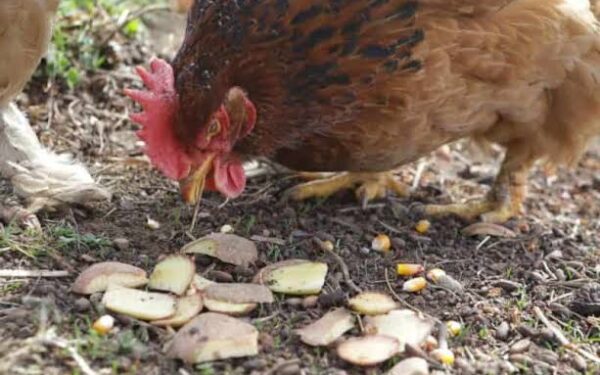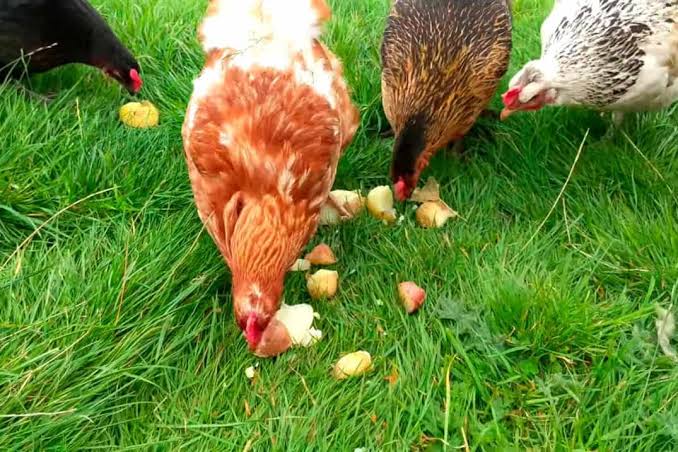
Potatoes are a kitchen staple, which means scraps pile up fast — and if you keep chickens, it’s natural to wonder whether those peels and leftover boiled potatoes can go straight to the run. The answer is yes, with some genuinely important caveats.
Quick answer: Chickens can eat cooked, plain potatoes in moderation. Raw potatoes are harder to digest and best avoided. Green-tinged potatoes, sprouts, and any part of the potato plant itself (leaves, stems, vines) should never be fed, cooked or raw, because they contain a toxic compound called solanine.
Here’s exactly what’s safe, what isn’t, and why the distinction matters more for potatoes than for most other vegetable scraps.
Why Potatoes Are Different From Most Kitchen Scraps
Regular potatoes (Solanum tuberosum) belong to the nightshade family, along with tomatoes, peppers, and eggplant. Nightshade plants produce solanine, a natural compound that defends the plant against pests and disease — and it’s toxic to chickens (and other animals, including humans) in large enough doses.
Solanine isn’t evenly distributed through the plant. It concentrates most heavily in:
- Green-tinged skin or flesh
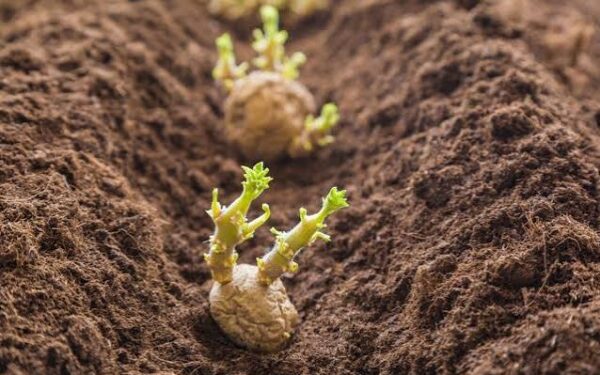
- Sprouts (“eyes”)
- The leaves, stems, and vines of the potato plant
The tuber itself, when mature, fully ripe, and free of green coloring, contains much lower levels — which is why cooked potato flesh is generally considered safe for chickens in moderation, while the plant’s foliage is not safe under any circumstances.
What’s Safe and What Isn’t
| Part of the potato | Safe for chickens? |
|---|---|
| Cooked, plain flesh (no green) | Yes, in moderation |
| Cooked, plain skin (no green) | Yes, in moderation |
| Raw flesh | Best avoided — harder to digest, higher solanine |
| Raw or cooked green-tinged areas | No — discard |
| Sprouts/eyes | No — cut away and discard |
| Leaves, stems, vines | No, ever — highest solanine concentration on the plant |
How to Feed Potatoes to Chickens Safely
- Cook before feeding. Boiling, baking, or steaming reduces solanine levels and makes the potato easier to digest. This is the single most important step.
- Inspect for green. Any green tinge — on the skin or in the flesh — means that piece should go to the compost bin, not the coop.
- Cut away sprouts and eyes before cooking, the same way you would for your own dinner.
- Skip the seasoning. No butter, salt, or oil — keep it plain.
- Feed in moderation. Potato should be an occasional treat, not a feed substitute. Treats generally shouldn’t crowd out a flock’s complete feed.
- Never offer the plant itself. If you’re growing potatoes and have extra vines or foliage from thinning the bed, keep it out of the chicken run entirely.
Nutritional Value of Cooked Potato for Chickens
Cooked potato isn’t nutritionally essential for chickens, but offered occasionally it provides:
- Carbohydrates for quick energy
- Some vitamin C and B vitamins
- Potassium
It’s worth being clear-eyed about this: potatoes are mostly starch, with a much lower overall nutrient density than vegetables like leafy greens or a comparable serving of sweet potato. They’re a fine occasional treat, not a nutritional cornerstone.
A Simpler Alternative: Sweet Potatoes
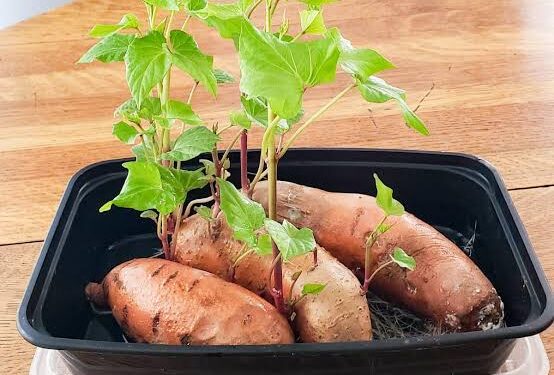
If tracking “cooked vs. raw” and “green vs. not” feels like more bookkeeping than a kitchen scrap is worth, sweet potatoes are a genuinely easier option. They’re a completely different plant — not a nightshade — and don’t carry the same solanine risk. Sweet potato flesh, skin, leaves, and vines are all safe for chickens, raw or cooked. See our full guide: Can Chickens Eat Sweet Potatoes?
Signs of Solanine Poisoning in Chickens
If you suspect a chicken has eaten a significant amount of raw or green potato material, watch for:
- Lethargy or weakness
- Diarrhea or digestive upset
- Loss of appetite
- In severe cases, neurological symptoms such as tremors or difficulty walking
If you see these signs, contact a poultry-experienced veterinarian promptly rather than waiting it out.
Frequently Asked Questions
Can chickens eat raw potatoes at all? It’s best to avoid raw potatoes entirely. They’re harder to digest than cooked potatoes and carry a higher concentration of solanine, particularly in and just under the skin.
Can chickens eat mashed potatoes? Plain, unseasoned mashed potato (no butter, salt, milk, or gravy) is generally fine in small amounts as an occasional treat. Skip any version made with seasoning, dairy in excess, or gravy.
Can chickens eat potato chips or fries? No — these are cooked in oil and heavily salted, neither of which is good for chickens in any quantity. Stick to plain, home-cooked potato.
Is it true that all parts of the potato plant are toxic except the tuber? Essentially, yes. The leaves, stems, and vines of the potato plant contain meaningfully higher solanine levels than the tuber and should never be fed to chickens, regardless of preparation.
How much potato is too much for a chicken? There’s no precise universal number, but as a general rule, potato (like any treat) shouldn’t make up more than a small fraction of a chicken’s diet — the bulk of their nutrition should come from a complete, balanced layer feed.
Curious whether the rules are different for sweet potato skins specifically? See Can Chickens Eat Potato Skins? for the full breakdown.