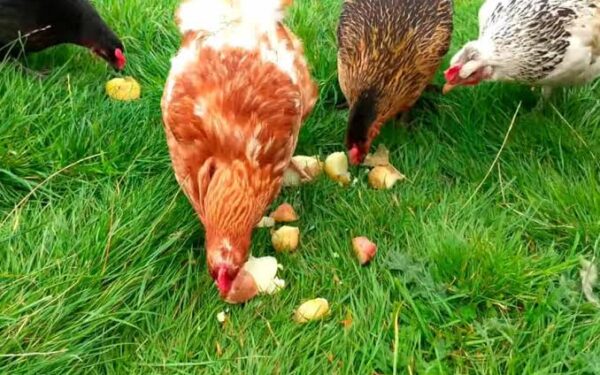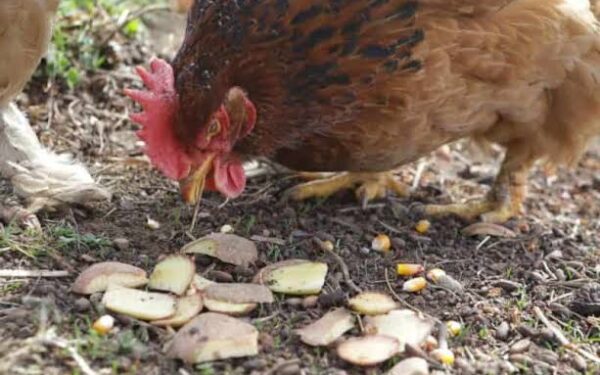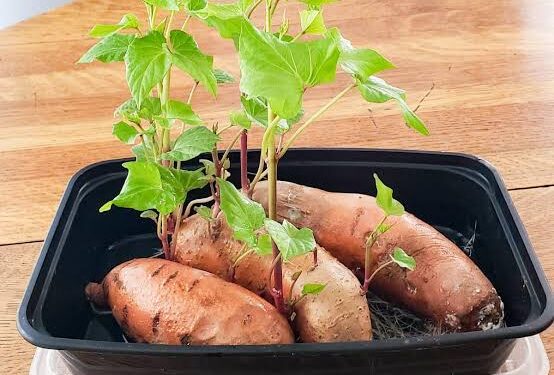
If you keep backyard chickens and you’re staring at a bag of sweet potatoes wondering whether to toss a few into the run, the short answer will make your life easier.
Quick answer: Yes. Chickens can eat sweet potatoes — the flesh, the skin, the leaves, and the vines — both raw and cooked. Sweet potatoes are not related to white (regular) potatoes botanically, and they don’t carry the same toxicity risks. They’re actually one of the more nutritious treats you can offer a flock.
That said, “safe” doesn’t mean “no rules at all.” Here’s what to know before you start feeding sweet potatoes to your chickens.
Why Sweet Potatoes Are Different From White Potatoes
This is the detail that trips up a lot of chicken keepers, so it’s worth explaining clearly. White (regular) potatoes belong to the nightshade family (Solanaceae), along with tomatoes, peppers, and eggplant. Nightshade plants produce a compound called solanine, which is concentrated in green skins, sprouts, and the leaves/stems of the plant — and it’s genuinely toxic to chickens in meaningful quantities.
Sweet potatoes are a completely different plant, in the morning glory family (Convolvulaceae). They don’t produce solanine, which is why the rules around feeding them are much more relaxed. Every part of the sweet potato plant — root, skin, leaves, vines, and even the flowers — is considered safe for chickens.
This is also why “can chickens eat potatoes” and “can chickens eat sweet potatoes” have genuinely different answers, even though the names sound similar.
What Parts of the Sweet Potato Can Chickens Eat?
| Part | Safe for chickens? | Notes |
|---|---|---|
| Flesh (root) | Yes, raw or cooked | Cooked is easier to digest |
| Skin/peel | Yes | Wash off any dirt or pesticide residue first |
| Leaves | Yes | Nutritious, contain protein and antioxidants |
| Vines | Yes | A useful low-cost forage if you grow your own |
| Flowers | Yes | Less common to offer, but not harmful |
Raw vs. Cooked: Which Is Better?
Both are technically safe, but they’re not equal:
- Raw sweet potato is harder for chickens to break apart and digest. Studies on digestibility put raw sweet potato nutrient availability noticeably lower than cooked. Cut it into small, thin pieces if you’re feeding it raw, so your flock can actually peck through it without choking risk.
- Cooked sweet potato (boiled, steamed, or baked — plain, no butter, salt, or seasoning) is softer, easier to eat, and more digestible. This is the better default if you’re feeding a mixed-age flock that includes smaller or younger birds.
Avoid feeding moldy sweet potatoes regardless of preparation — mold on stored tubers can produce toxins that are unsafe for poultry.
Nutritional Benefits for Your Flock
Sweet potatoes bring real nutritional value to a chicken’s diet, not just empty filler:
- Vitamin A (as beta-carotene) — supports immune function and egg yolk color.
- Vitamin C — chickens can synthesize their own, but extra dietary vitamin C is still useful, especially in hot weather or stressful conditions.
- Fiber — supports digestive health.
- Manganese, potassium, and B vitamins (thiamin, niacin, folic acid) — found in meaningful amounts in the leaves and vines specifically.
How to Serve Sweet Potatoes to Chickens
- Wash thoroughly to remove dirt and any pesticide residue, especially if the skin is going on too.
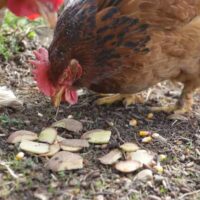
- Cut into manageable pieces. Whole tubers are too big and round for chickens to get a grip on — slice or dice so multiple birds can access it without fighting over one piece.
- Cook if you’re unsure about digestibility, particularly for chicks or older hens. Boiling or steaming until soft is the simplest method.
- Serve as a treat, not a staple. Like most produce, sweet potatoes should supplement a complete layer feed, not replace it. Treats — including vegetables — should generally stay under about 10% of a chicken’s daily intake so they don’t crowd out balanced nutrition.
- Scatter rather than dump in one pile, especially with a larger flock, so lower-ranking birds get fair access.
What to Avoid
- Don’t feed white/regular potatoes raw or green, or any part of the regular potato plant (leaves, stems, sprouts, green-tinged skin) — that’s where the genuine solanine risk lives.
- Don’t feed moldy sweet potatoes.
- Don’t season it — no butter, salt, or sugar. Plain is always safest for poultry.
- Don’t make it the main course. Even healthy treats should stay a minority of the diet.
Frequently Asked Questions
Can chickens eat sweet potato skins? Yes. Sweet potato skins are safe for chickens raw or cooked, as long as they’re washed first.
Can chickens eat sweet potato leaves and vines? Yes — they’re actually one of the more nutrient-dense parts of the plant, containing protein, fiber, and antioxidants. This makes sweet potato vines a useful low-cost forage if you’re growing your own crop.
Are sweet potatoes the same as yams for chickens? In most grocery stores, “yams” are actually a variety of sweet potato, so the same feeding guidance applies. True yams (a different plant entirely, common in West African and Caribbean cuisine) are less commonly studied for poultry feeding and are usually given cooked, as a precaution.
Can baby chicks eat sweet potatoes? In small, soft, cooked pieces, yes, as an occasional treat once chicks are a few weeks old and established on starter feed. Avoid raw pieces for chicks, since they’re harder to digest.
Can chickens eat too much sweet potato? Overfeeding any single treat, including sweet potato, can unbalance a chicken’s diet and lead to excess weight gain or reduced interest in their complete feed. Moderation is the rule, not the exception.
Growing your own sweet potatoes to feed both your family and your flock? See our full How to Plant Sweet Potatoes guide for step-by-step planting, care, and harvest timing.