Japanese sweet potatoes (satsumaimo) have purple-red skin and pale, almost white-gold flesh that bakes up dramatically sweeter, drier, and creamier than the orange-fleshed variety most Western recipes call for. Cook them the way you’d cook a regular sweet potato, though, and you’ll miss what makes them special — they reward a slower, more deliberate method.
Quick answer: The best way to cook Japanese sweet potato is to roast it whole in the oven at a low 325°F (160°C) for 60–90 minutes, which is the traditional yaki imo method and produces the sweetest, creamiest results. For a faster, crispier-skinned version, roast at 400–425°F (200–220°C) for 45–60 minutes instead. Steaming (about 25 minutes) is the quickest hands-off option if you’re short on time.
Here are all three methods, plus the tricks that actually make a difference in flavor.
Method 1: Low and Slow Roasting (Best Flavor — Traditional Yaki Imo Style)
This is the method behind Japan’s classic roasted sweet potato street food, and it’s worth the extra time if you’ve never tried it. The slow heat gives the potato’s natural enzymes time to convert starch into sugar, which is why this method produces a noticeably sweeter result than fast roasting.
- Preheat the oven to 325°F (160°C).
- Wash the potatoes well and pat dry — no need to peel.
- Poke a few holes in each potato with a fork or skewer to let steam escape.
- Wrap each potato individually in foil, or leave them bare on a baking sheet (foil-wrapped gives a softer skin; bare gives a slightly chewier, more caramelized skin).
- Roast for 60–90 minutes, depending on size, until a skewer slides through with no resistance.
- Let them rest for 10–15 minutes after roasting — this extra resting time continues to develop sweetness.
Method 2: High-Heat Roasting (Faster, Crispier Skin)
If you want results in under an hour, or you prefer a slightly crisp, caramelized skin over a softer one, roast hot and bare.
- Preheat the oven to 400–425°F (200–220°C).
- Wash and dry the potatoes, then prick a few times with a fork.
- Place directly on a parchment- or foil-lined baking sheet — don’t wrap in foil for this method, since trapped steam softens the skin you’re trying to crisp up.
- Roast for 45–60 minutes, until the skin is puffed and a fork slides easily to the center.
- Let cool for 5 minutes before slicing open.
Method 3: Steaming (Fastest Hands-Off Method)
Steaming is the quickest route to tender results and keeps the kitchen cooler in hot weather, though it won’t develop quite the same depth of caramelized flavor as roasting.
- Set a steaming rack or basket in a large pot with about an inch of water.
- Bring the water to a boil, then reduce to medium-low.
- Place the whole, unpeeled potatoes on the rack, cover, and steam for about 25 minutes.
- Check for doneness with a fork — it should pierce through with no resistance. Add a few more minutes for larger potatoes.
A Few Tips That Make a Real Difference
- Let them ripen before cooking. Freshly harvested or freshly purchased Japanese sweet potatoes are often noticeably less sweet than ones that have sat at room temperature, in a dark spot, for a week or two. The extra storage time lets starches continue converting to sugar.
- Don’t skip the rest after roasting. The 10–15 minutes after the potato comes out of the oven isn’t just cooling time — flavor continues to develop as it sits.
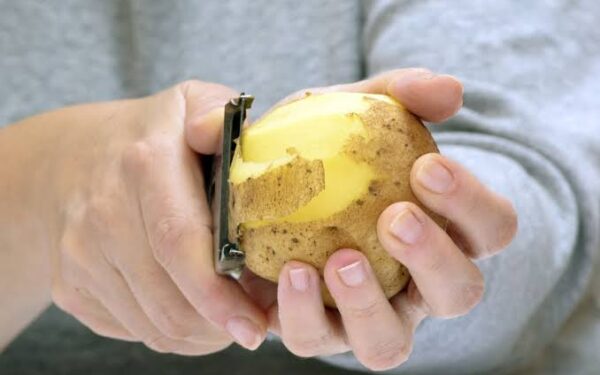
- The skin is edible. Many people eat Japanese sweet potato skin along with the flesh; it’s thinner and less fibrous than some root vegetable skins. Peel it if you prefer, but you’re not missing a safety step by leaving it on.
- Skip the microwave if flavor is the goal. It’s the fastest option, but the quick, uneven heat doesn’t give the starch-to-sugar conversion enough time, so the result is noticeably less sweet than roasting or steaming.
How to Tell When It’s Done
Texture, not time, is the real test — sizes vary enough that minutes alone aren’t reliable. A bamboo skewer or thin knife inserted into the thickest part should slide through with little to no resistance. If you feel any firmness in the center, give it more time and check again in 10-minute increments.
Serving Ideas
Japanese sweet potato is sweet and creamy enough to stand on its own, but a few simple ways to serve it:
- Split open and topped with a pat of butter and a pinch of flaky salt
- Drizzled with a miso-tahini sauce for a savory-sweet contrast
- Mashed with a little cinnamon as a simple side dish
- Cooled, cubed, and added to grain bowls or salads
- Frozen after cooking, then eaten slightly thawed — it takes on a dense, creamy, almost ice-cream-like texture that’s a popular way to enjoy it in Japan
Storage
- Uncooked: Store at room temperature, in a dark spot, for up to a month — and remember, this resting time actually improves sweetness.
- Cooked leftovers: Refrigerate in an airtight container for 3–5 days, or freeze for up to a month.
- Reheating: A few minutes in a warm oven brings back the texture better than the microwave, which can make the flesh slightly gummy.
Frequently Asked Questions
What’s the difference between Japanese sweet potato and regular sweet potato? Japanese sweet potato (satsumaimo) has purple-red skin and pale yellow-white flesh that’s drier, denser, and sweeter once cooked than the moister, orange-fleshed sweet potato common in Western cooking.
Do I need to peel Japanese sweet potato before cooking? No. The skin is edible and commonly eaten along with the flesh. You can peel it after cooking if you prefer, but it’s not required.
Why is my roasted Japanese sweet potato not very sweet? A few likely culprits: it was cooked too fast at too high a temperature, it wasn’t given time to “ripen” at room temperature before cooking, or it was microwaved instead of roasted. The slow, low-temperature method develops the most sweetness.
Can I cook Japanese sweet potato in an air fryer? Yes — pierce with a fork, then air fry at around 380°F (193°C) for 35–45 minutes depending on size, checking for fork-tenderness partway through.
Is Japanese sweet potato healthier than regular sweet potato? Both are nutritious whole foods rich in fiber and vitamins. Japanese sweet potato tends to be slightly lower in beta-carotene (vitamin A) than the orange-fleshed variety, since the orange color itself comes from that pigment, but it’s still a nutrient-dense choice either way.
Want to try growing your own? See our complete How to Plant Sweet Potatoes guide for planting, care, and harvest timing.