Potatoes are such a kitchen staple that it’s almost inevitable a piece ends up on the floor near an eager dog at some point. The good news is that potatoes aren’t off-limits — but unlike sweet potatoes, there’s a genuine toxicity concern to understand, not just a digestion one.
Quick answer: Yes, dogs can eat potatoes — but only when fully cooked, plain, and with the skin removed. Raw potatoes, green-tinged potatoes, sprouts, and any part of the potato plant (leaves, stems, vines) contain solanine, a compound that’s toxic to dogs and should never be fed in any amount.
Here’s the complete breakdown of what’s safe, what isn’t, and why potatoes need more caution than most root vegetables.
Why Potatoes Are Different From Sweet Potatoes
This distinction matters a lot for dog safety. Regular (white) potatoes belong to the nightshade family (Solanaceae), along with tomatoes and eggplant. Nightshade plants naturally produce solanine, a compound that’s genuinely toxic in meaningful quantities — to dogs, and to people. Solanine concentrates most heavily in:
- Raw potato flesh and skin
- Green-tinged areas
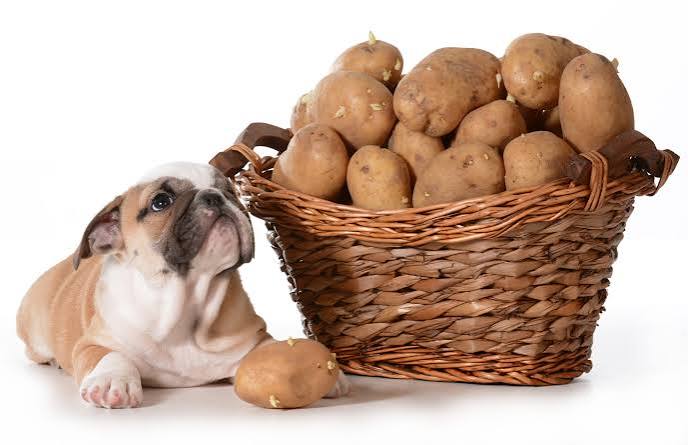
- Sprouts (“eyes”)
- The leaves, stems, and vines of the plant
Sweet potatoes are an entirely different plant (not a nightshade) and don’t carry this same risk — which is why sweet potato gets more relaxed feeding guidance than regular potato. If you’re also curious about that comparison, see our guide: Can Dogs Eat Sweet Potatoes?
What’s Safe and What Isn’t
| Form | Safe for dogs? |
|---|---|
| Cooked, plain potato flesh (skin removed) | Yes, in moderation |
| Cooked potato skin | Best avoided — tougher to digest and higher in solanine than the flesh |
| Raw potato (any part) | No |
| Green-tinged potato (cooked or raw) | No |
| Sprouts/eyes | No |
| Leaves, stems, vines of the plant | No, ever |
| French fries, chips, or fried potato | No — too much fat, salt, and often seasoning that’s harmful to dogs |
| Potatoes with butter, salt, gravy, or seasoning | No — plain only |
How to Safely Feed Potato to Your Dog
- Cook thoroughly. Boiling, baking, or steaming significantly reduces solanine levels. Never feed raw potato.
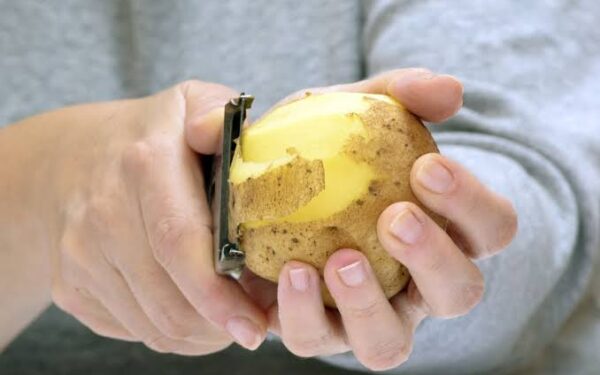
- Peel before serving. The skin carries a higher concentration of solanine than the flesh and is also harder to digest.
- Check for green and sprouts before cooking, and cut away or discard any affected portion — the same way you would for your own meal, just with a lower margin for error since dogs are more sensitive to solanine, pound for pound, than people.
- Skip all seasoning. No butter, salt, garlic, onion, or gravy — garlic and onion in particular are toxic to dogs even in small amounts.
- Serve in small, plain pieces, appropriately sized for your dog.
How Much Potato Can a Dog Have?
Treat potato as an occasional treat, not a regular food. A widely used guideline is the “10% rule” — treats of any kind shouldn’t exceed about 10% of a dog’s total daily calories, with the rest coming from a complete, balanced dog food.
A few additional reasons to keep portions modest:
- Potatoes are relatively high on the glycemic index compared to many vegetables, meaning they can cause a quicker rise in blood sugar. This matters more for dogs with diabetes or weight management needs.
- They’re calorie-dense for their size, mostly from starch, with less overall nutrient density than something like sweet potato.
If your dog has diabetes, is overweight, or has any chronic health condition, check with your vet before making potato a regular part of their diet.
Benefits of Cooked Potato for Dogs
In small, plain, occasional amounts, cooked potato isn’t harmful and offers some nutritional value:
- Carbohydrates for quick energy
- Vitamin C and some B vitamins
- Potassium
- Fiber, particularly if a small amount of skin is included (though most guidance still recommends removing skin as the safer default)
That said, potato isn’t considered a nutritional standout for dogs the way some vegetables are — it’s a reasonably safe occasional treat rather than something to actively build into a diet.
What If Your Dog Eats Raw Potato?
A small bite of raw potato that fell off the counter usually isn’t an emergency, but it’s worth monitoring. Watch for:
- Vomiting or diarrhea
- Lethargy
- Loss of appetite
- Drooling
- In more serious cases: tremors, weakness, or difficulty breathing — these would indicate a more significant solanine exposure and warrant an immediate call to your vet or an emergency animal poison control line.
If your dog ate a large quantity of raw potato, or any amount of the green parts, sprouts, or the plant’s leaves/stems, contact your veterinarian rather than waiting to see what happens.

Frequently Asked Questions
Are potatoes toxic to dogs? Not inherently — a fully cooked, plain, peeled potato is generally safe in moderation. The toxicity risk specifically comes from raw potato, green portions, sprouts, and the plant’s leaves/stems/vines, all of which contain solanine.
Can dogs eat mashed potatoes? Plain mashed potato (no butter, salt, garlic, or gravy) is okay in small amounts as an occasional treat. Most restaurant or homemade mashed potatoes include enough added butter, salt, or seasoning to make them a poor choice — plain and homemade is the safer bet.
Can dogs eat potato skins? It’s best to remove the skin before feeding. It’s tougher to digest and carries more solanine than the flesh.
Are sweet potatoes a safer choice than regular potatoes for dogs? In terms of toxicity risk specifically, yes — sweet potatoes aren’t a nightshade and don’t carry the same solanine concern. Both still need to be cooked and plain; raw is a digestion/choking issue for sweet potato rather than a toxicity one.
Can puppies eat potatoes? In small, soft, cooked, plain amounts, occasionally, yes — but check with your vet first, and be extra cautious about portion size given a puppy’s smaller body weight.
This article is general information, not a substitute for veterinary advice. If your dog has eaten something you’re unsure about, contact your vet or an animal poison control hotline.